
Quick answer
What drives borewell drilling cost — depth, diameter, geology, casing and the pump — and how estimating depth first with a free scan helps you budget accurately and avoid surprises.
What you pay for
- Depth — usually charged per metre/foot; the biggest variable.
- Diameter & casing — wider bores and more casing cost more.
- Geology — hard rock is slower and pricier than soft ground.
- Pump & accessories — motor, pipe, cable and starter sized to depth and yield.
Estimate depth first to budget right
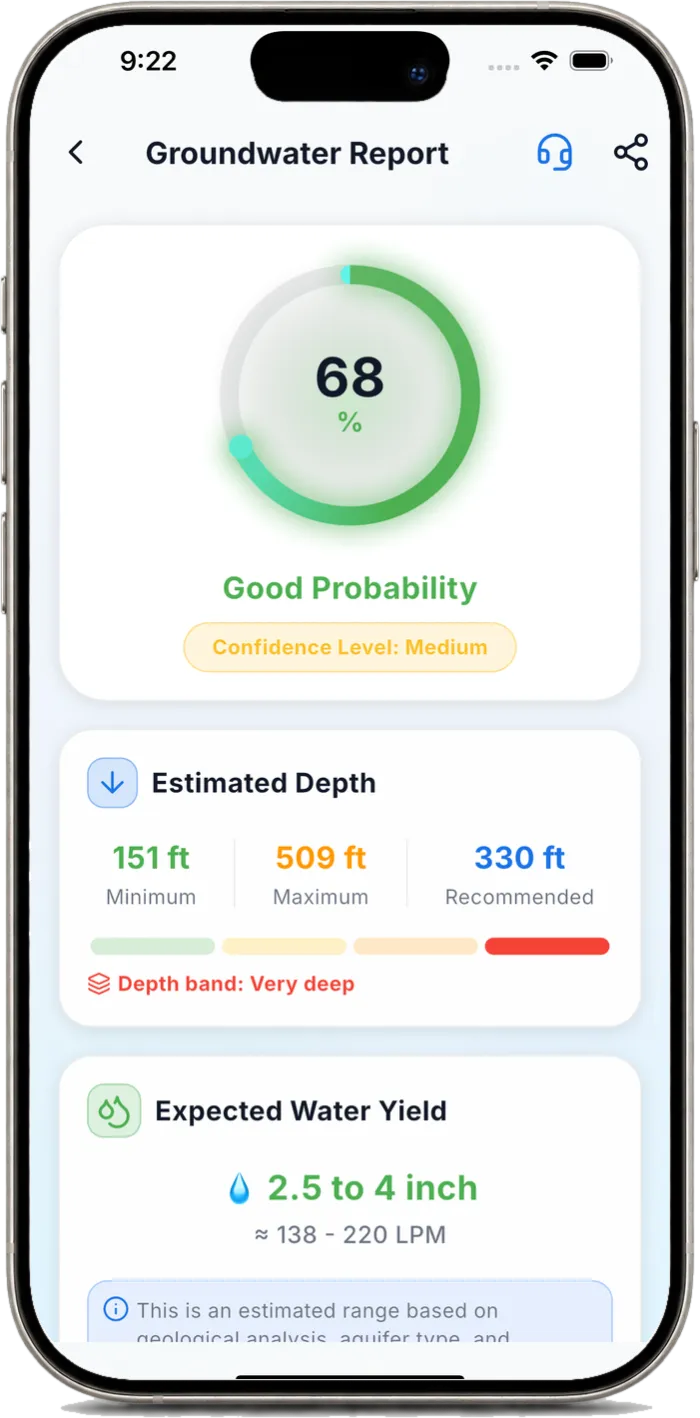
A scan gives an estimated depth band for your point, so you can get accurate quotes and avoid mid-job surprises.
JalDrishti is free worldwide: unlimited groundwater scans, reports, maps and a bore calculator, with voice guidance in 33 languages. You only ever pay if you choose an optional certified-geologist review.
Use the bore calculator
Once you know depth and yield, the in-app bore calculator recommends the motor, pipe, cable and starter so you can price the full setup.